It's no surprise that a survey found men are more workaholic than women. Men are less likely to use all of their vacation days and more likely to feel guilty about the time they do take off. Researchers tracked the health of 13,000 men for 9 years and found that those who took annual vacations more frequently decreased their risk of heart desease and death. Men and woman should never feel guilty about taking vacation time they have earned.......Contact Us
Use the widget below to find your best vacation deals.
Friday, September 23, 2011
5 Classic American Drives
The open road is as much a part of American heritage as the silver screen, which is why we let the cinema — from 'Thelma & Louise' to 'Sideways' — guide us to our country's most inspiring drives.
By William Bailey
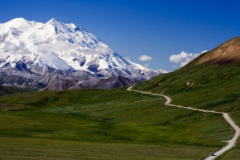
Denali's 6-million-plus acres are home
to grizzlies, caribou, Dall sheep, and Mt. McKinley.
Nothing triggers wanderlust quite like a classic American road-trip movie. The best of these films evoke the feeling of a place in such a way that the scenery becomes a character in its own right.
With that in mind, we started our search for great American drives at the movies, where we watched reel after reel until we found five films that feature U.S. highways and landscapes as prominently as the protagonists. From the vast soundstage of the Southwest to the Technicolor magic of the Alaskan wilderness, each of these drives captures the spirit of the film that inspired the route.
July 13, 2011 8:06 a.m. EDT July 13, 2011 8:06 a.m. EDT
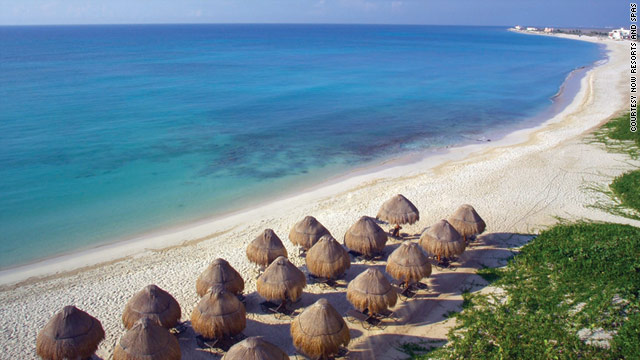
Daily rates of $220 per person at Now Jade Riviera Cancun include bungee jumping and water sports.
(Travel + Leisure) -- The concept was a great one for a teenager: getting thrown into the pool by flirtatious staffers, eating all the French fries I wanted at every single meal, watching grown-ups humiliate themselves during "talent night."
But those spring-break trips to all-inclusive resorts that I loved as an awkward adolescent were something I have avoided at all costs as an adult. Swapping bracelet beads for drinks, competing with the throngs lined up for soggy burgers and watching people drink margaritas with breakfast is not my idea of a dream holiday. Nor is it my sister's; we agree that her memories of our childhood trips are just as well left in the past. Read More
The hotel you choose can make or break your vacation. It doesn't matter that the surf was killer or the snow was pristine if the hotel doesn't stack up. You spent hours comparing prices, locations and continental breakfasts, but in the end, you can't tell whether or not a hotel will meet your expectations until you get there. FULL STORY
Want a real break? Forget the hassle of getting in and out of America's metropolises—with their $400 hotel rooms and mobbed tourist attractions. Instead, hit these miniopolises, where top-notch food comes straight from the farm and your third round is on the house. Here are eight reasons to downsize your next vacation.FULL STORY
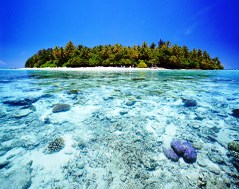
Vacations, Hurry Before There Gone/New Hobby Idea Picture the gorgeous beach you spent a week on this summer. Now picture that same beach next summer, destroyed. Perhaps it eroded so much that there's barely room to spread out a towel. Maybe a colossal concrete hotel is being built where the sand dunes used to be. Maybe it has been coated with a slick of spilled oil. Hopefully, your slice of paradise will remain well preserved.If we don't curb global warming, insist on sustainable development, and protect the world's beaches against pollution and mismanagement, they will disappear very fast and be gone forever. The Maldives Islands: Tourism began in the Maldives relatively late. A United Nations mission on development which visited the Maldive Islands in the 1960s did not recommend tourism, claiming that the islands were not suitable. Ever since the launch of the first resort in Maldives in 1972, however, tourism in Maldives has flourished. Rising sea levels all but doom this string of 26 low-lying atolls in the Indian Ocean, unless the rest of the world acts—quickly—to curb global warming.
Goe, India: Goa’s unique history and culture, combined with its tropical climate and picturesque beaches make it the ideal place to escape to during the winter.Palolem beach stretches between two magnificent headlands and the beach is lined with towering coconut palms. Every season bamboo-hut resorts and restaurants are erected along the beach allowing tourists to stay right on the sand, only a few meters away from a swim in the Arabian Sea. The beach huts range from very basic to somewhat luxurious, with en suite huts becoming more common every year.However,the state's entire 63-mile coastline is eroding, and some beaches have lost as much as 65 feet of landmass in recent years due sea erosion and companies removing sand from the dunes for many new harbors being constructed.
Phu Quoc, Vietnam:This peaceful tropical paradise, floats in the warm turquoise waters in the Gulf of Thailand, 50kms from the Vietnamese mainland and a 50 minute flight from Ho Chi Minh City. Most are concentrated on Long Beach, a 12-mile strip of white sand running south from Duong Dong. Those closest to the town of Phu Quoc back onto a dusty dual carriageway studded with melancholy hawkers' stalls selling cans of green tea and the aptly-named Harpoon Gin. Vietnam's hopelessly convoluted and corrupt bureaucracy will make it hard to get much built on Phu Quoc. But the 12-mile stretch of paradise known as Bai Truong (Long Beach) has already seen some concrete cookie-cutter hotels crop up alongside the more charming thatched-roof bungalows and this type constructionwill eventually take over the serenity of the island.
Saugatuck Dunes, Michigan: It is an area of striking beauty. Along the shores of Lake Michigan at the mouth of the Kalamazoo River, the 2,500 acres that comprise the Saugatuck Dunes Coastal Area boast a sparsely-developed landscape of spectacular beach, rare freshwater dunes, water, woods and wetlands; habitat to several endangered species; and home to a large number of significant historic and archeological sites. This cultural landscape and pristine view shed is now threatened by a proposed 400-acre residential development, including marina, hotel, restaurant and retail complex -- all prohibited by law for now by local zoning laws, but people are bucking the system and it won`t be long before it has to give way to future progress.
Maracco: When the Arabs first arrived here in the 7th century, they called the land "al bilad al Maghreb", the "western extreme" - the final stretch of terra firma before it is swallowed by the endless waters of the ocean. A land of horizons, where sea, sand dunes, skies and mountains extend interminably, Morocco is also a place of contrasts.
The Moroccan government has designated Larache as a target for major resort development, but the large-scale removal of sand makes the beaches unsuitable for tourism. It also ruins turtle and seabird nesting areas and exacerbates erosion problems by removing nature's defenses against storms. Also, because of the threat of terrorism around the world lately there is a general threat from terrorism in Morocco. Attacks could be indiscriminate, including in places frequented by expatriates and foreign travellers. You should have confidence in your individual security arrangements and maintain a high level of vigilance.
Mullins Bay,Barbados:This is the place to relax in a lounge chair under the umbrellas and shade of the Casuarina or palm trees, take a dip in the safely roped off areas, or venture out further on a jetski!
You may find that beaches throughout Barbados are usually fairly quiet , however, Mullin's Bay offers something unique . Of course, this spot isn't one many would call metropolitan it isn't those planning on stopping at this beach during their vacations will enjoy escaping the buzz of city life without missing an opportunity to meet new people.
On the island's northwest coast, sunbathers used to be able to walk from the popular beach bar on Mullins Beach north for several miles up the sandy shore. Now, there are only impassable boulders, sea walls, and crashing surf.The Barbados government maintains that global warming is the main culprit in the island's erosion problem, and rising sea levels and severe storms certainly play a role, but to protect its shoreline, Barbados also needs to balance the demands of development and preservation. Vacation now because no one knows how long these beautiful places will be available to us tourists. Thanks for listening,G Wells
Use the widget below to find your best vacation deals.
Do Kids Need a Summer Vacation?
Why our schoolchildren get to take three months off.
By Juliet Lapidos
Posted Wednesday, July 11, 2007, at 4:09 PM ET
Are summers without school healthy for kids?Most American school kids are about three weeks in to their three-month summer vacation. Yet working adults (the Explainer included) spend the better part of June, July, and August toiling away as usual. Why do kids enjoy such generous summer breaks?
FacebookDiggRedditStumbleUponCLOSEFiscal limitations, century-old developmental theories, and outdated medical concerns. The now-standard 180-day academic calendar with a long summer holiday didn't come about until the early 20th century. Previously, urban schools operated year-round with short breaks between quarters. In 1842, Detroit's academic year lasted approximately 260 days, New York's 245, and Chicago's 240. But since education wasn't mandatory in most states until the 1870s, attendance was low. Despite the official schedule, many kids ended up spending the same amount of time in school back then as they do now. Brooklyn school officials, for example, reported in 1850 that more than half their students showed up just six months a year.
Related in Slate
Chris Suellentrop explains how much vacation the president gets. David Plotz argues that the United States would be better off without August. Eric Klinenberg assesses why so many people die in heat waves, and why Americans don't seem to care. Emily Yoffe gives the lowdown on vouchers, charter schools, and magnet schools.Poor attendance got some people wondering if such a long academic calendar was worthwhile. Why keep schools open year-round if most kids don't even go? Reformers also warned that goody-goodies who did show up every day might burn out. Many physicians at the time felt that students were too frail, both in mind and body, for so many days at their desk. Too much education, they argued, could impair a child's health.
City school officials began listening to reformers around the turn of the century. Gradually, they shortened the school year by about 60 days and eliminated the summer quarter. Reformers could have instituted a long break in winter, or spring, but they picked summer for three main reasons. 1) Poorly ventilated school buildings were nearly unbearable during heat waves. 2) Community leaders fretted that hot, crowded environments facilitated the spread of disease. 3) Wealthy urbanites traditionally vacationed during the hottest months, and middle-class school administrators were following in their footsteps.
Meanwhile, the school districts outside cities had quite different academic calendars. In the 19th century, rural kids spent just five or six months in school—two to three months in summer and the same in winter—and the rest of the year laboring on farms. So while urban educators worried that children were overtaxed by their busy schedule, officials in rural areas thought their students were mentally undertaxed. By the early 20th century, public-school officials in many farm states had lengthened the academic year and introduced a summer break to bring agrarian districts into line with urban ones.
Physicians no longer believe that children are too feeble for year-round instruction, and most school buildings now have effective ventilation systems. So why don't we go back to having school in the summertime? For one thing, it's expensive to keep schools open, just like it was in the late 1800s. But some nonprofit organizations argue that the long breaks hinder the learning process. According to the Johns Hopkins Center for Summer Learning, kids score worse on standardized tests in early September than in late June. Plus, students in other industrialized countries have more instructional time. The Israeli academic year lasts 216 days, and kids in Japan plug away for a whopping 243 days per annum.